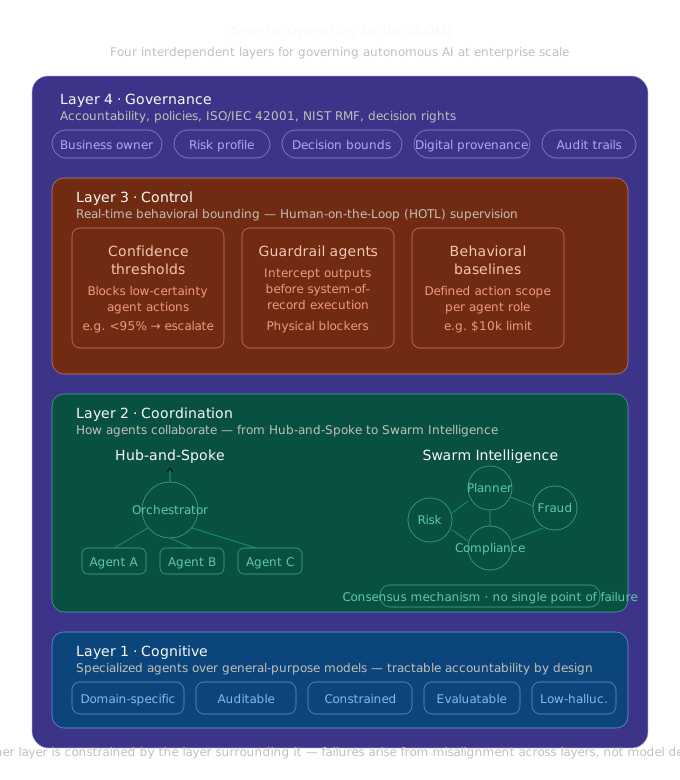
As AI agents evolve from tools into autonomous actors, the question shifts from “What can the agent do?” to “How do we govern what it does?”
If you have spent time designing Cloud Operating Models, aligning DevOps practices, platform teams, and shared-responsibility (RACI) matrices, this challenge will feel familiar. The difference: agentic AI doesn’t just execute pipelines. It makes decisions. And that demands a new governance framework similar to decisions which are written down and governed in corporate environments.
The Agentic Operating Model (AOM) has four interdependent layers: Cognitive, Coordination, Control, and Governance that together constrain autonomy while preserving its benefits.